The Real Story of the
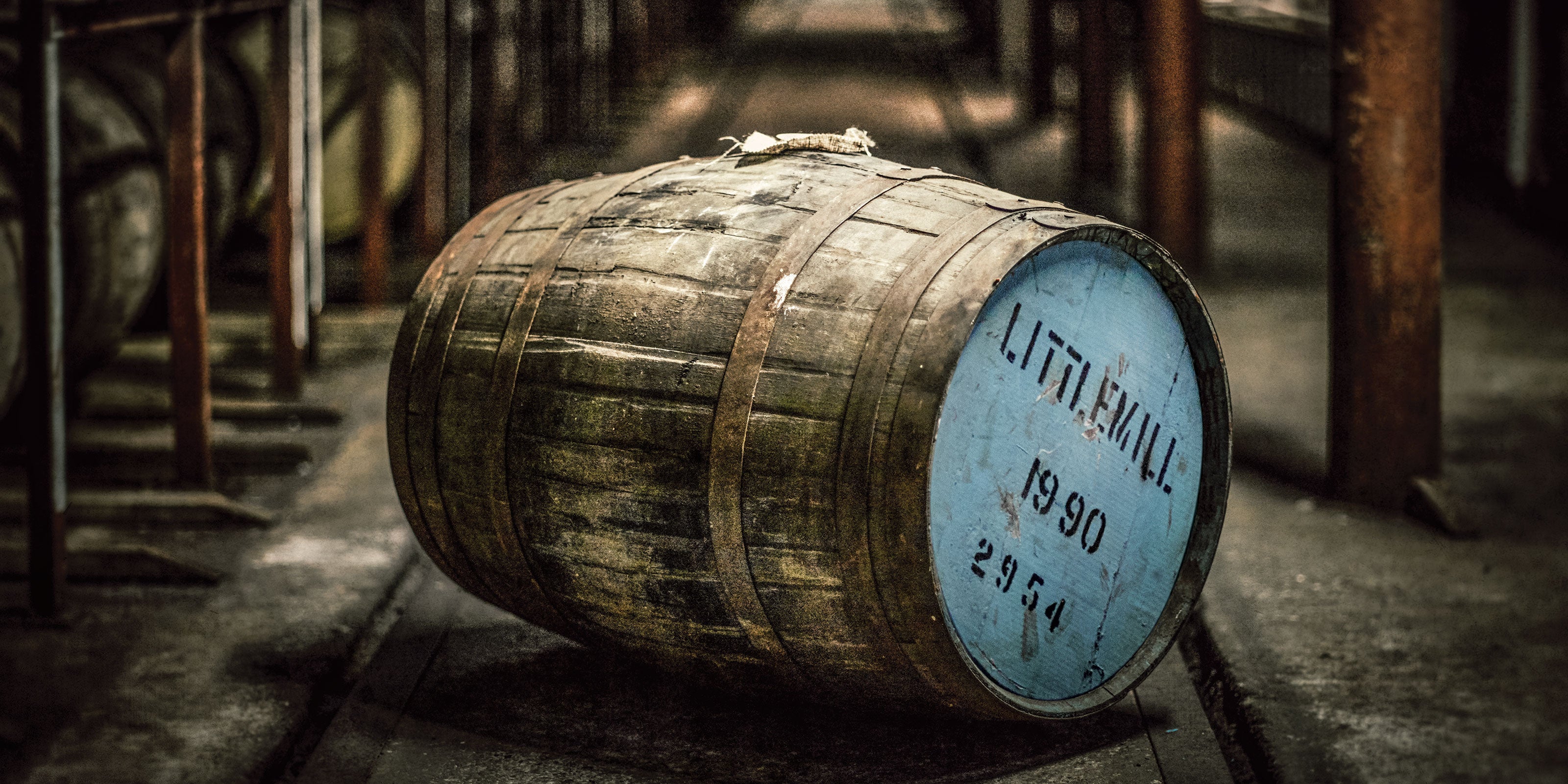
The real story of Littlemill Distillery begins over two centuries ago. In 1750 Archibald Buchanan purchased Auchentorlie Estate, just a few miles west of Loch Lomond on the banks of the River Clyde, from his brother Andrew. And with it, a brewery called Littlemill.

In the 15th century, a staple drink for many people was beer, with the brewery on the grounds of Auchentorlie supplying amongst others, the monks of nearby Paisley Abbey. Archibald & George Buchanan had their eye on making something infinitely more complex and significantly more valuable.
History tells us they went on to do so in some measure and with very great success, establishing Scotland’s first and oldest licensed whisky distillery in 1772.
That same year accommodation was also built next door to the distillery to house the Excise officers who represented the law - and ensured any distillation was duly recorded and relevant taxes calculated. This suggests that something was already afoot onsite some time before 1772 (indeed, in a less than official capacity, the brewery, which was attached to Dunglass Castle nearby, may well have been distilling liquor as early as the 14th century).
November 1773
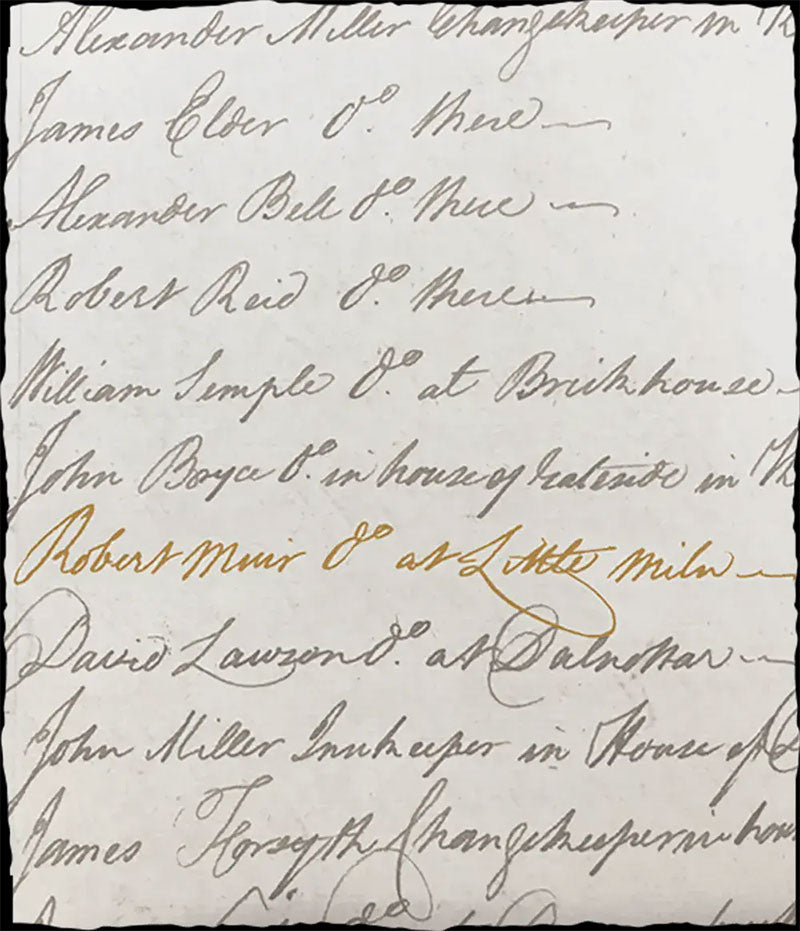
After one year, on the 2nd of November 1773, local Justice of the Peace records for Dumbarton show that ‘Robert Muir of Littlemiln’, an employee, was granted the first ever licence by the Government of King George the 3rd to “…retail ale, beer and other excisable Liquors.”
For over 220 years the date stone on the gable end of one of the warehouses on which was carved ‘1772’ remained firmly and proudly in place, until in 1994, the distillery closed and the stills of Littlemill finally fell silent. Three years later the distillery was largely dismantled.
The 1773 Licence Agreement
Transcript of the 1773 Justice of the Peace records...
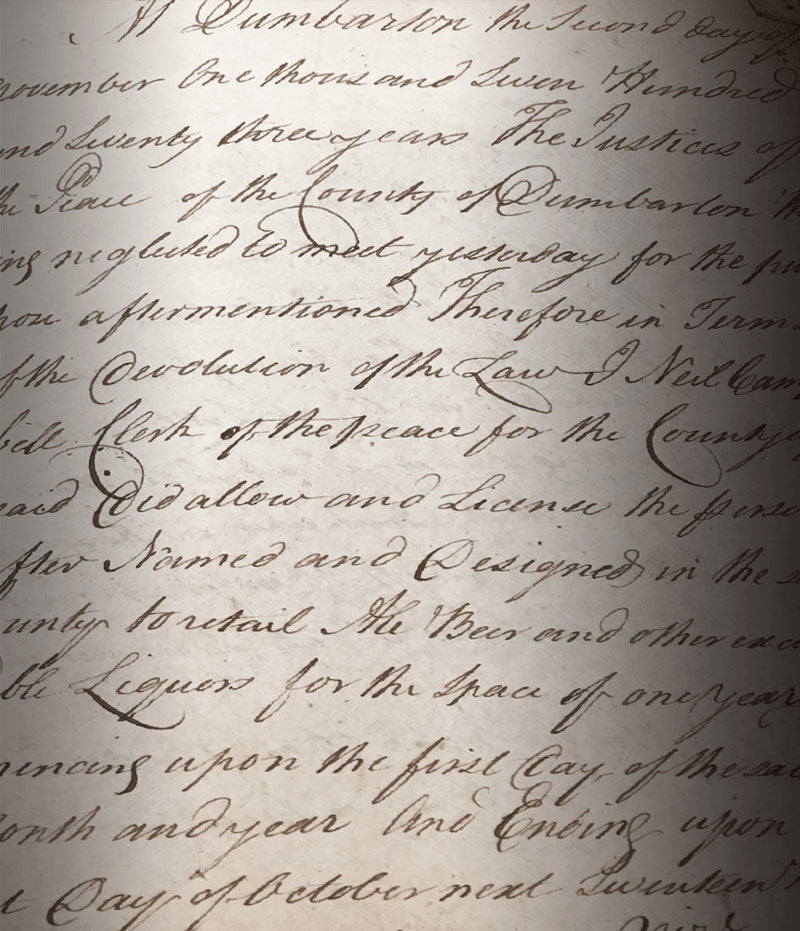
At Dumbarton the second day of November one thousand seven hundred and seventy three years The Justice of the Peace of the County of Dumbarton having neglected to meet yesterday for the purpose aftermentioned, therefore in terms of the Devolution of the Law of Neil Campbell, Clerk of the Peace for the County aforesaid, did allow and licence the persons after named and designed in the said County to retail Ale, Beer and other exciseable Liquors for the space of one year for commencing upon the first day of the said month and year and ending upon the first day of October next seventeen hundred and seventy four years.
November 1773
After one year, on the 2nd of November 1773, local Justice of the Peace records for Dumbarton show that ‘Robert Muir of Littlemiln’, an employee, was granted the first ever licence by the Government of King George the 3rd to “…retail ale, beer and other excisable Liquors.”
For over 220 years the date stone on the gable end of one of the warehouses on which was carved ‘1772’ remained firmly and proudly in place, until in 1994, the distillery closed and the stills of Littlemill finally fell silent. Three years later the distillery was largely dismantled.
The 1773 Licence Agreement
Transcript of the 1773 Justice of the Peace records...
At Dumbarton the second day of November one thousand seven hundred and seventy three years The Justice of the Peace of the County of Dumbarton having neglected to meet yesterday for the purpose aftermentioned, therefore in terms of the Devolution of the Law of Neil Campbell, Clerk of the Peace for the County aforesaid, did allow and licence the persons after named and designed in the said County to retail Ale, Beer and other exciseable Liquors for the space of one year for commencing upon the first day of the said month and year and ending upon the first day of October next seventeen hundred and seventy four years.

1777
Land is leased by Sir Archibald Edmonstone of Duntreath to John Clarke for 57 years after Whitsunday (seventh Sunday after Easter).
1781
Cluster housing in Littlemill village is built – infamously known as “Tile Row”
1792
The Distillery Manager’s house is built on site.
1817
The distillery changes ownership to Matthew Clark & Co.
1823
Mrs Jane MacGregor of Littlemill becomes one of the first female licensees in Scotland… and the world.
1851
Ownership changes to Hector Henderson also a shareholder in Campbeltown distillery.
1875
Littlemill distillery is rebuilt and expanded by Hay & Co.
1929
The distillery is temporarily closed.
A New dawn
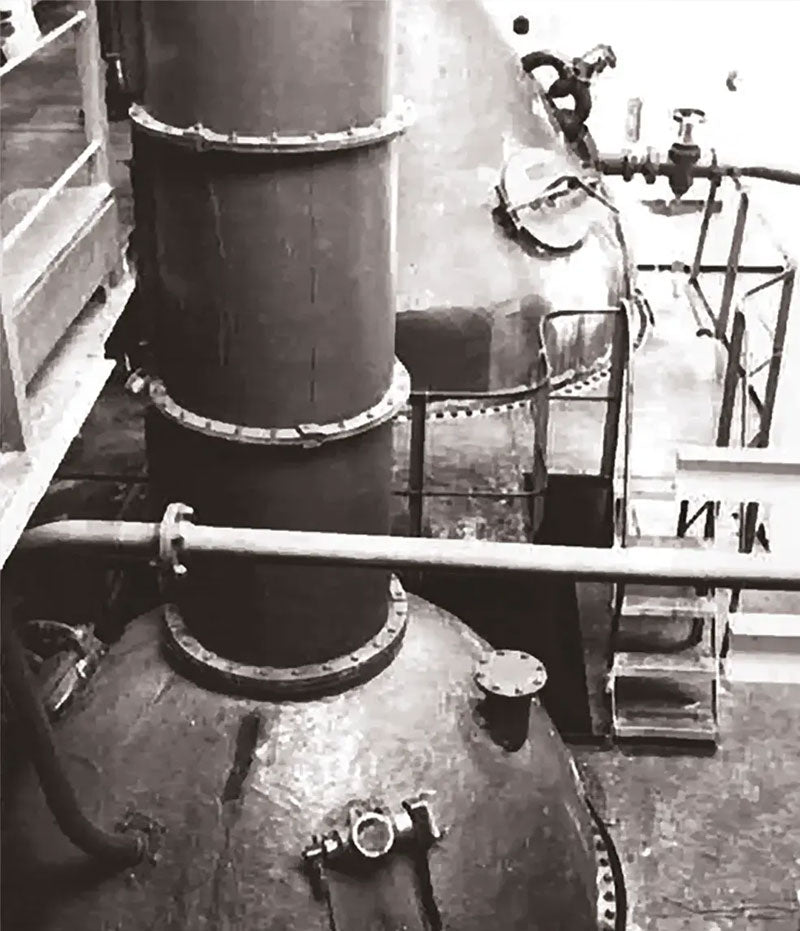
After one of its brief closures in 1929, Littlemill was bought and reopened by American entrepreneur and chemist Duncan Thomas in 1931. One of the forgotten innovators of Scotch whisky, it was Thomas who introduced a new design of Saladin box for malting with two ventilation towers and a single kiln, switched from the Lowland tradition of triple distillation to double distillation, and installed new hybrid stills with copper pot still bodies and rectifying columns instead of swan necks to have greater control over the distillation process and allow a number of different characters to be produced.
Throughout this time, Littlemill was at the forefront of still innovation, boasting a unique ability to create three styles of single malts - a light and delicate traditional Littlemill Lowland whisky and two experimental malts - the heavily peated Dumbuck and a full-bodied whisky called Dunglass, after the castle nearby.

2004
The remnants of the distillery are destroyed by fire.
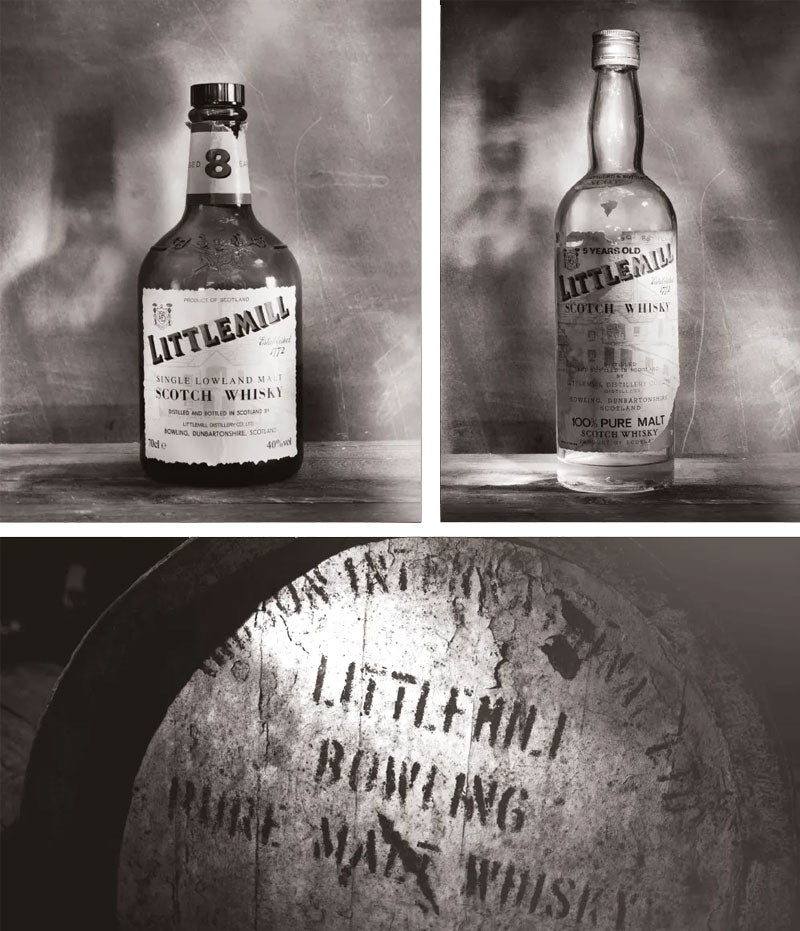
Up until its final days, Littlemill Distillery continued to innovate and produce exceptional Lowland malt whisky of great character. Using water sourced north of the Highland line in the Kilpatrick Hills, peat from Stornoway and malt from Perthshire, the Littlemill whiskies reflect a beautiful summer whisky, whose characteristics reveal gentle vanilla and floral notes on the nose with the sweetness of honey and creamy fudge which continues onto the palate with classic Lowland fruit flavours.
A Final Twist In our tale
Would Archibald and George Buchanan ever have dreamed that their legacy at Littlemill would last well into the 21st century?
Of course, we’ll never know. But what we do know is that over the next few years, Michael Henry, our master blender at Loch Lomond Distillery, will use his skills to carefully select the very finest liquid from the remaining casks of Littlemill to create a limited number of expressions bottled and released in strictly controlled numbers of just a few hundred bottles.
These whiskies will pay homage to the true Littlemill distillery character. And of course, allow the lucky few to taste the final legacy of Scotland’s oldest distillery.
The Buchanans’ would have been very proud. In these last precious drops from the distillery you started centuries ago, Sirs, we salute you. Slainthe!
We’d Love to Hear Your Littlemill Story
Littlemill’s story continues through the memories and voices of those who lived it. If you worked at the distillery, knew someone who did, or simply have a connection through the whisky, we’d be honoured to hear about it. Even after the fire, our passion for Littlemill lives on in these stories.
Please share your memories with us—whether a fond anecdote, a family link, or photos of your bottle or memorabilia. Our team receives each message with deep respect and gratitude.
Fill in the form below or contact us directly at heritage@littlemilldistillery.com (please quote “Your Littlemill Story” in the subject).
Contact Us
Do you have any question?
Your privacy matters — any stories shared will be treated with sensitivity. You can choose whether you’d like your contribution to be anonymous, or how you'd like to be credited (name, initial, “former employee,” etc.). We won’t share details without permission.
Loch Lomond Distillery, Lomond Estate, Alexandria, Scotland G83 0TL
Tel:+44 (0) 1389 752 781 | enquiries@littlemilldistillery.com